
Sea dragons
THE SEA DRAGONS
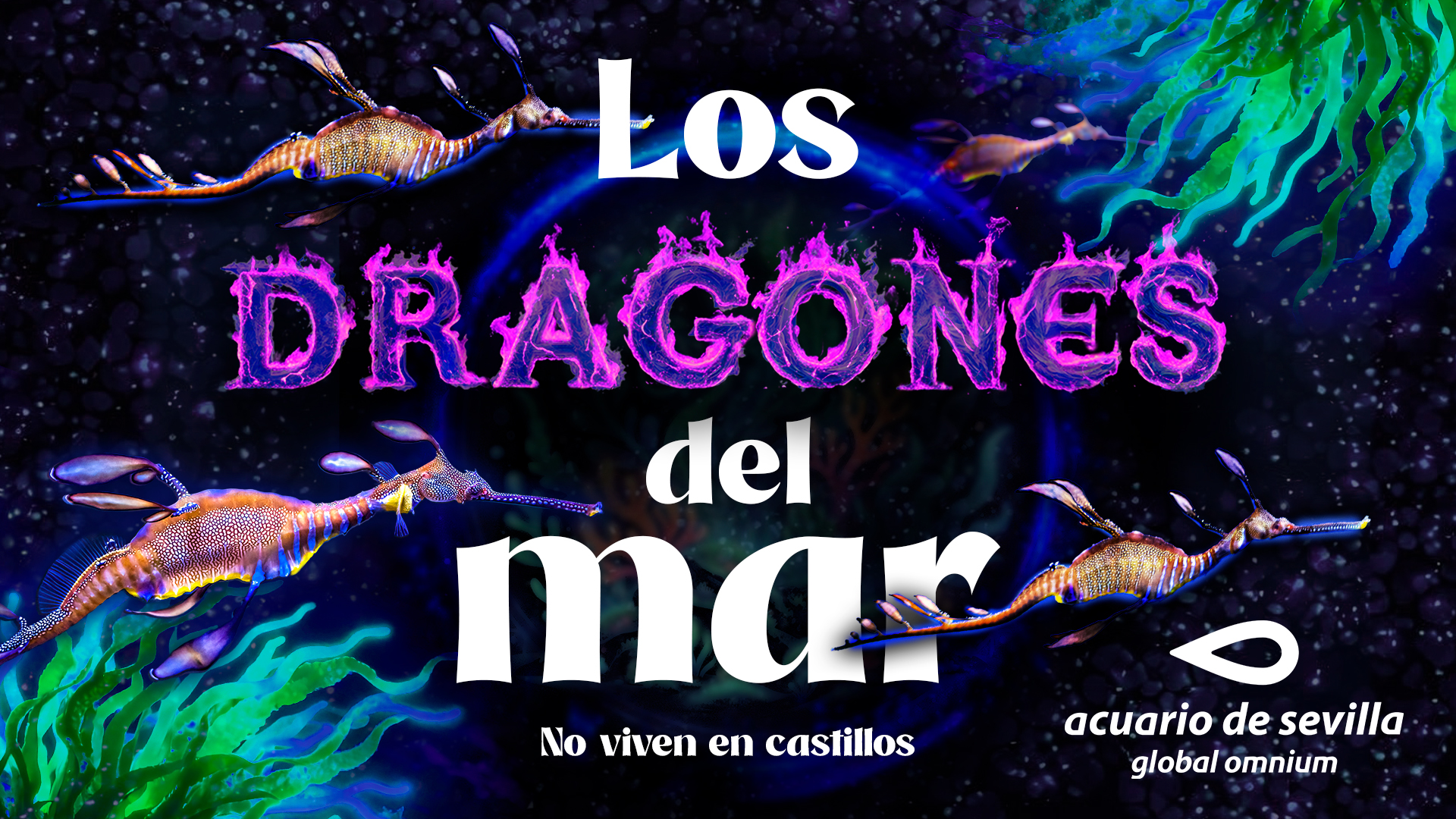
The creatures also known as "sea dragons" have arrived at the Seville Aquarium.
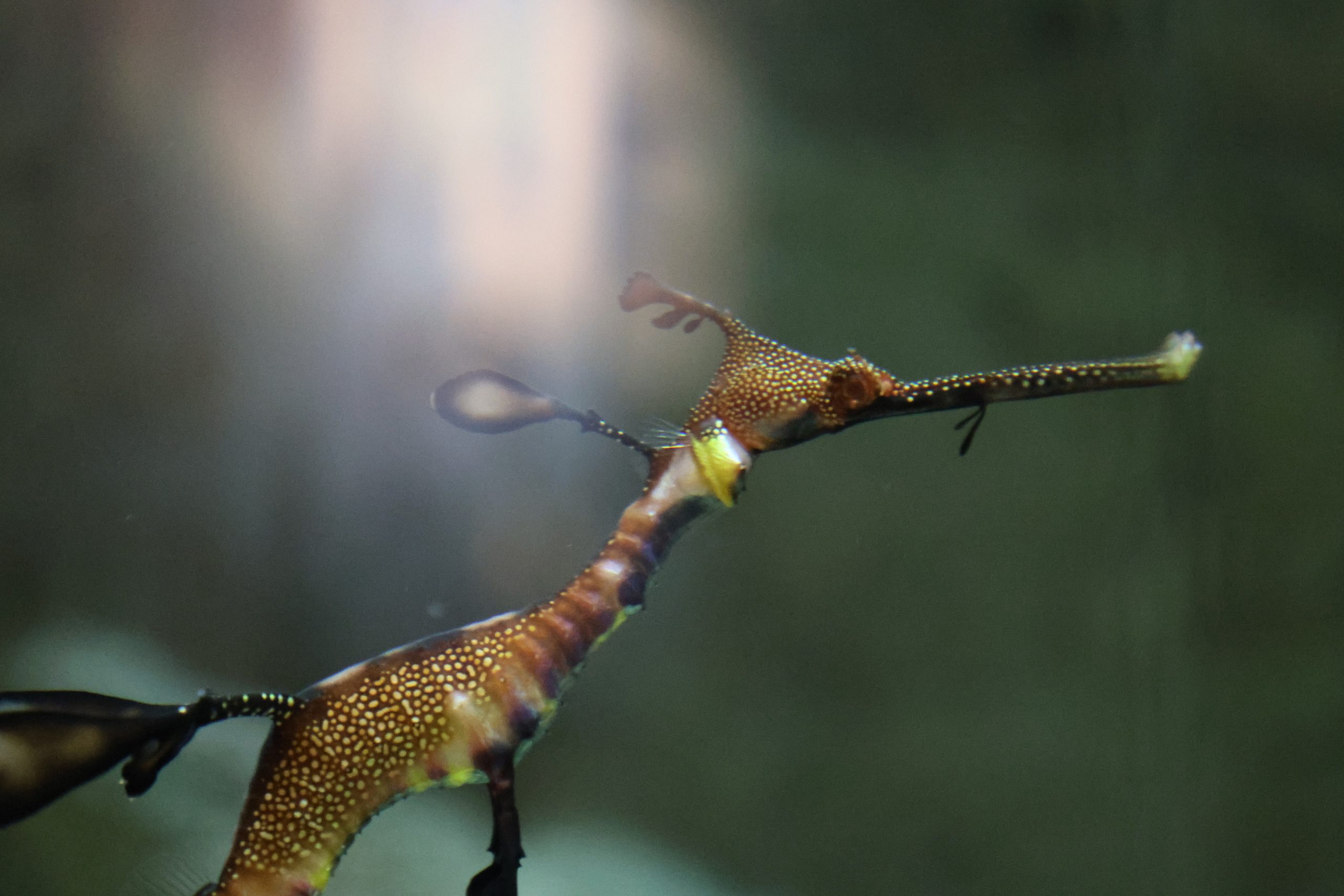
Discover one of the marine world's most amazing species. Weedy seadragons (*Phyllopteryx taeniolatus*) have arrived at the aquarium, giving you the chance to see one of the planet's most extraordinary fish up close.
With an appearance that seems straight out of a legend and a unique ability to camouflage, these fascinating animals prove that nature always surpasses imagination.
What are sea dragons?
They are marine fish native to southern Australia and Tasmania. Although their appearance makes them unique, they belong to the same family as seahorses and pipefish (Syngnathidae).
Their unique anatomy, elegant way of moving, and remarkable adaptations make them one of the ocean's most extraordinary species.
Masters of camouflage
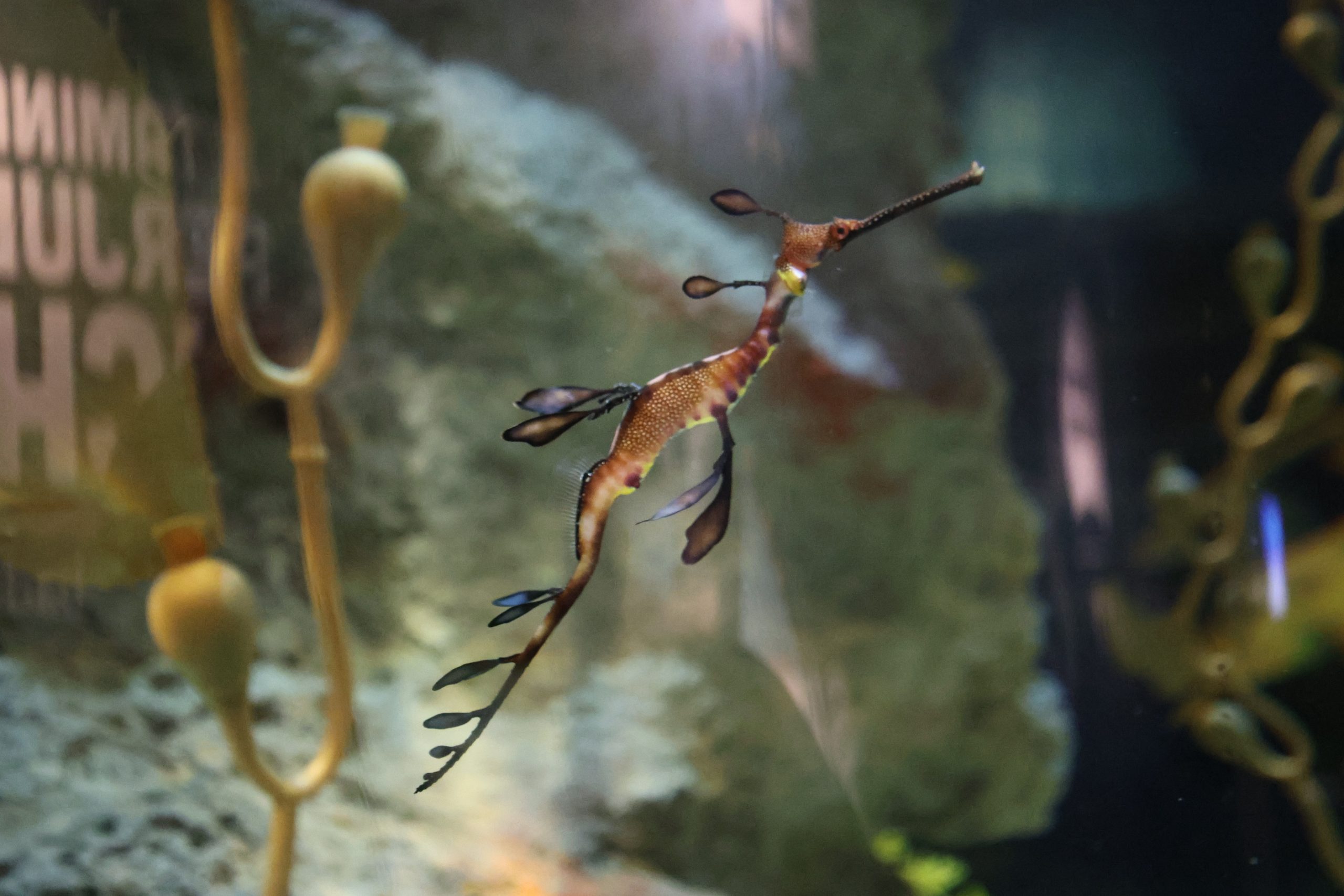
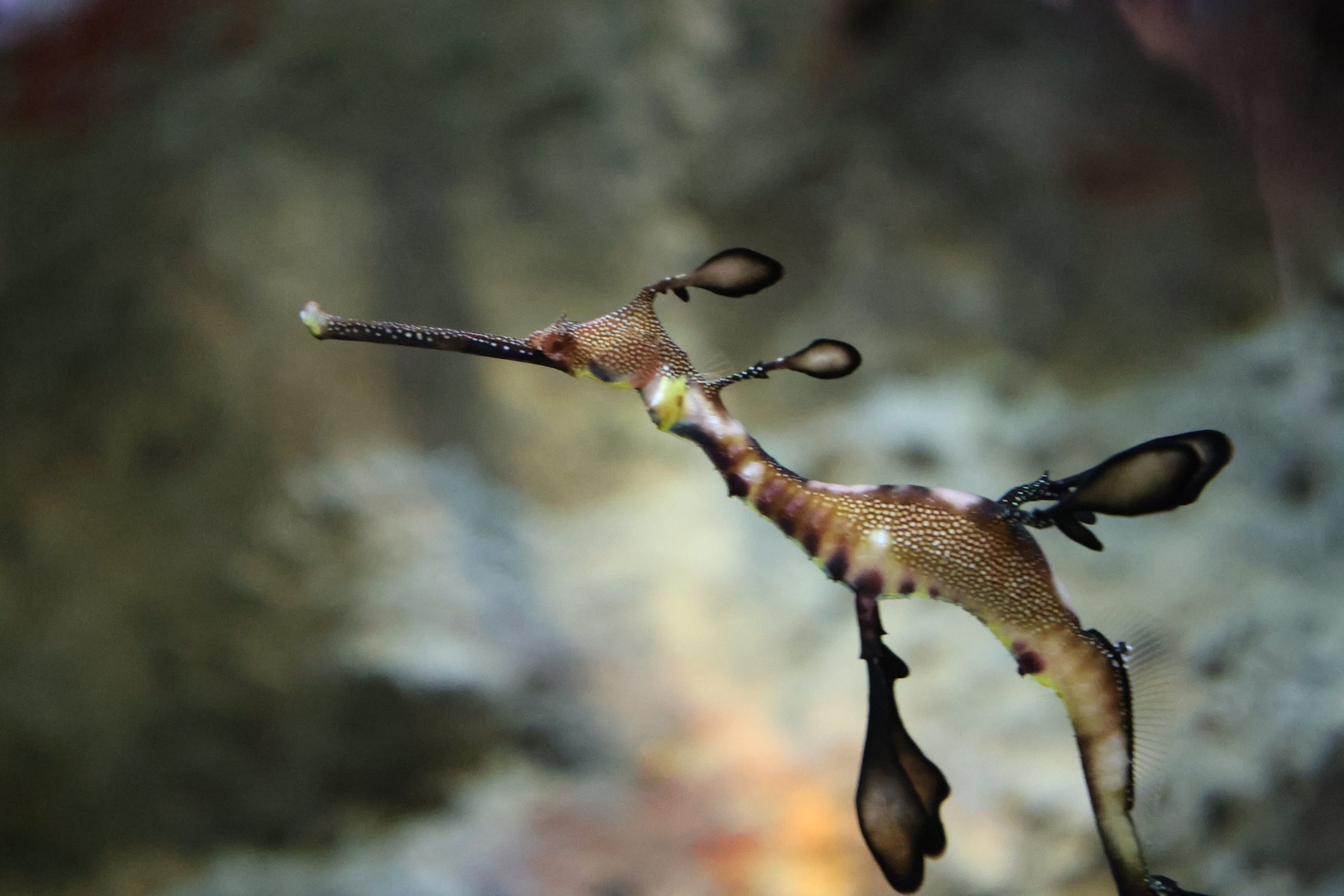
Sea dragons have developed a unique survival strategy. The appendages covering their bodies mimic the shape of seaweed; combined with the gentle swaying motion they exhibit as they drift with the currents, these features allow them to blend into their surroundings and remain virtually unnoticed by predators.
A life linked to the ocean
These fascinating animals inhabit kelp forests and seagrass meadows—ecosystems of great ecological value.
They are slow, delicate swimmers, so they rely entirely on these habitats for feeding, shelter, and reproduction. When these ecosystems disappear, their chances of survival diminish as well.
As is the case with seahorses, the male plays a fundamental role in reproduction: he carries the eggs attached beneath his tail until the young hatch—an adaptation rarely seen in the fish world.
A little ambassador of the ocean
The common seadragon (Phyllopteryx taeniolatus) is classified by the IUCN as Near Threatened.
The degradation of seagrass meadows, the disappearance of macroalgae forests, and the pollution of coastal areas threaten the future of this species and many others that share its habitat.
At the Seville Aquarium, we want to introduce people to these animals to demonstrate the importance of protecting marine ecosystems and to remind everyone that conserving the oceans also means preserving the extraordinary biodiversity they harbor.